
Building a Mobile Phone Spec Database — Hundreds of Devices, Every Detail, From Nothing
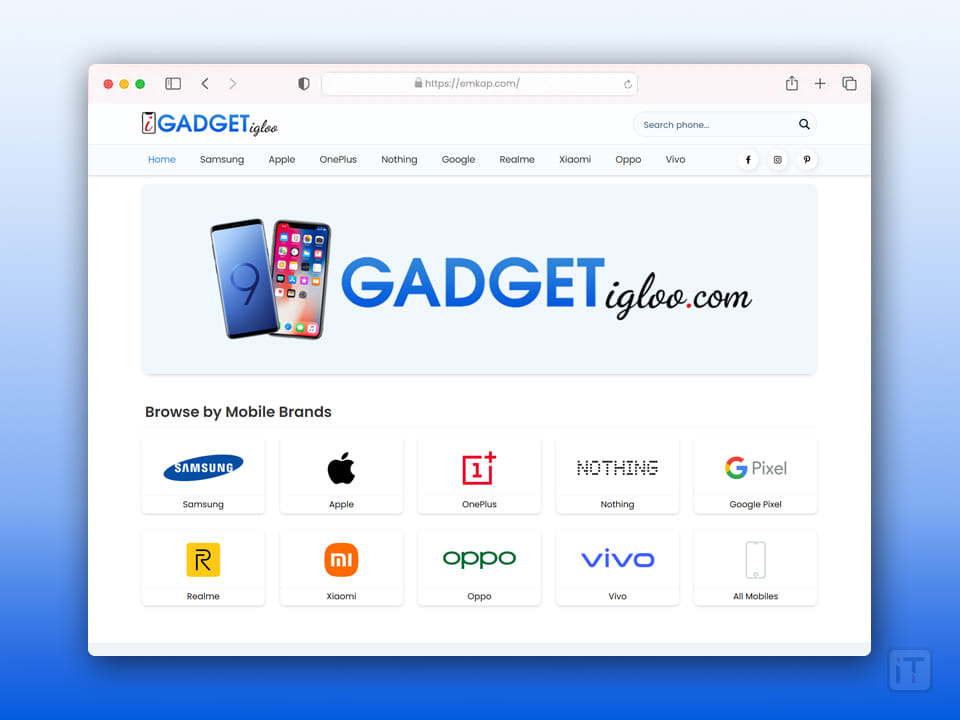
Gadget Igloo is a comprehensive mobile phone specifications and price comparison site covering Samsung, Apple, Xiaomi, OnePlus, Nothing, Google, Realme, Oppo, Vivo, and more. The client came with an idea. We built the entire platform — design, architecture, custom taxonomy system, automated Antutu benchmark scores, and populated every phone listing ourselves. Two months of work.
An Idea, a Blank Page, and a Very Specific Vision
The client came with a concept, not a design. They wanted a mobile phone specifications and price comparison database — a Pakistani answer to sites like GSMArena, where buyers could browse phones by brand, filter by RAM, screen size, and price, and get comprehensive technical specifications for every device in the catalogue.
There was no existing site, no existing design, no existing data. Everything — the visual design, the site architecture, the database structure, the content, the automation, and the data entry — was iTechtics’ work from day one. The client’s contribution was the idea and the vision. Our contribution was turning that into a working product.
This is a different kind of project from most agency work. It’s not a marketing site or an e-commerce store — it’s a data product. The complexity isn’t in the design (though that matters). It’s in the architecture: how do you build a system in WordPress that can hold hundreds of phones, each with dozens of specification fields, filterable by multiple parameters, and maintainable without a developer for every update?
Design, Build, Populate — All of It
No part of this project was handed to us ready-made. Every element of the site — from the visual identity to the last spec field — was created, configured, or populated by the iTechtics team.
Full visual design produced by iTechtics — homepage layout, brand pages, phone listing cards, individual spec pages, filter sidebar, navigation. No template, no reference design provided.
WordPress custom post types and taxonomy system designed to hold hundreds of phones with dozens of spec fields each — structured for both display and searchability.
Every phone on the site — Samsung, Apple, Xiaomi, OnePlus, Nothing, Google, Realme, Oppo, Vivo — was researched, formatted, and entered by the iTechtics team. Not imported. Hand-built.
Antutu benchmark scoring integrated with an automated system — scores update without manual intervention, keeping the database accurate as new benchmark results emerge.
Multi-dimensional filtering by brand, RAM, screen size, display resolution, and price tier — all built on WordPress taxonomy with clean URL structures for SEO.
A single dynamic template that powers every phone’s detail page — display specs, processor, RAM, storage, camera, battery, connectivity, and benchmark scores all structured consistently.
Hundreds of Phones. Every Spec Field. All Entered by Our Team.
The data population effort on this project is what most people underestimate when they think about a spec database. Each phone listing isn’t just a name and a price — it’s a full specification sheet covering display technology, processor model, RAM configurations, storage options, camera system (main, ultrawide, telephoto, front), battery capacity, charging speed, connectivity (5G, WiFi, Bluetooth versions), OS version, dimensions, and weight.
Multiply that across hundreds of devices, across nine major brands, spanning entry-level budget phones to flagship devices, and you have a significant data entry and quality assurance operation. The iTechtics team researched, formatted, and entered every listing.
One Template. Hundreds of Detail Pages.
The individual phone specification pages are the core product of Gadget Igloo. Each page needs to present the full technical specification of a device in a structured, readable format — while also being optimised for search so that someone Googling “Samsung Galaxy S25 Ultra specifications” lands on the right page.
We built a single dynamic template in Bricks Builder that powers every phone detail page. The template pulls all specification data from the custom fields of each device’s post and renders it in a consistent layout. Add a new phone to the database — the page exists instantly, fully formatted.
- Display — type, size, resolution, refresh rate
-
Processor — chipset name, architecture, nm node
-
RAM — all available configurations
-
Storage — options, expandable or not
-
Camera — rear system (main/ultrawide/telephoto), front
-
Battery — capacity, charging speed, wireless charging
-
OS — Android/iOS version at launch
-
Network — 5G/4G bands, carrier support
-
WiFi — standard (WiFi 6E/7 etc), frequency
-
Bluetooth — version and profiles
-
NFC, USB standard, SIM type
-
Dimensions and weight
-
Build materials — frame, back panel, glass type
-
Antutu benchmark score — automated
Benchmark Scores That Stay Current — Automatically
Antutu benchmark scores are one of the most searched data points for any phone — they give buyers a single comparable performance number across devices. But benchmark scores aren’t static. They update as new test runs emerge, as software optimisations change performance, and as new chipset generations are benchmarked against previous ones.
Manually maintaining accurate Antutu scores across hundreds of devices would be an ongoing operational burden. We built an automated system that handles it — benchmark scores are fetched and updated without the team having to source and enter them one by one. The database stays accurate without the manual overhead.
Antutu scores across hundreds of devices — from budget Redmi phones scoring in the 300,000–400,000 range to flagship Snapdragon 8 Elite devices pushing past 2 million — are maintained automatically. When Antutu publishes new benchmark data, the system captures it. Editors don’t have to hunt down scores and manually update each device entry. It’s a small automation with a large ongoing time saving.
Browse Any Way You Want to Buy
A spec database is only useful if visitors can find what they’re looking for. Gadget Igloo’s taxonomy system was designed around how real buyers actually shop for phones — not just by brand, but by the specific technical parameters that matter to them.
By Brand
Samsung, Apple, Xiaomi, OnePlus, Nothing, Google, Realme, Oppo, Vivo — each with a dedicated brand page
By RAM
1GB through 12GB+ — separate filterable pages for each tier, targeting buyers with specific memory requirements
By Screen Size
3.0–4.9″, 5.0–6.9″, 7.0–8.9″ — for buyers who prioritise form factor
By Resolution
QHD, FHD, HD and below — separate pages per display resolution standard with all matching devices
By Price Tier
Premium, mid-range, and budget segments — curated lists for different buyer budgets
Best Phones Lists
Editorially curated “Best of 2026” and “Best Premium/Mid-Range/Budget” lists linking to full spec pages
Each taxonomy page is SEO-optimised with its own title, meta description, and heading structure — so “12GB RAM mobile phones” or “QHD display phones” are findable on search, not just navigable from the homepage.
Two Months. Not Because It Was Slow — Because It Was Thorough.
Most web projects take time in design and development. This one took most of its time in data. Building the platform — the WordPress architecture, the custom post types, the Bricks Builder templates, the taxonomy system, the Antutu automation — was several weeks of work. But populating it with accurate, verified specifications across hundreds of devices across nine brands added considerable time on top.
Every specification was verified against official manufacturer data. Prices were entered in USD for international comparability. Images were sourced and optimised per device. The end result is a database that’s accurate, consistent, and built to be trusted by its visitors.
Built for Scale — Add a Phone in Minutes
Bricks Builder was the right choice for a data-heavy site like this specifically because of how efficiently it renders database-driven content. With custom post types and advanced custom fields wired to dynamic Bricks templates, adding a new phone to the database creates a fully formatted, SEO-ready spec page instantly — no design work, no template editing.
Active Maintenance. The Database Keeps Growing.
Gadget Igloo has an active maintenance contract with iTechtics. The mobile phone market moves fast — new flagships launch monthly, new chipsets arrive quarterly, and specs need to stay current to remain trustworthy. Our maintenance engagement keeps the database updated as new devices launch and ensures the platform continues to perform reliably.
The site is hosted on iTechtics infrastructure, giving us direct control over performance, security, and uptime. When Samsung announces the Galaxy S26 series or Xiaomi launches a new Ultra model, the Gadget Igloo listing can be live the same day — because the team that built the platform is also the team maintaining it.